
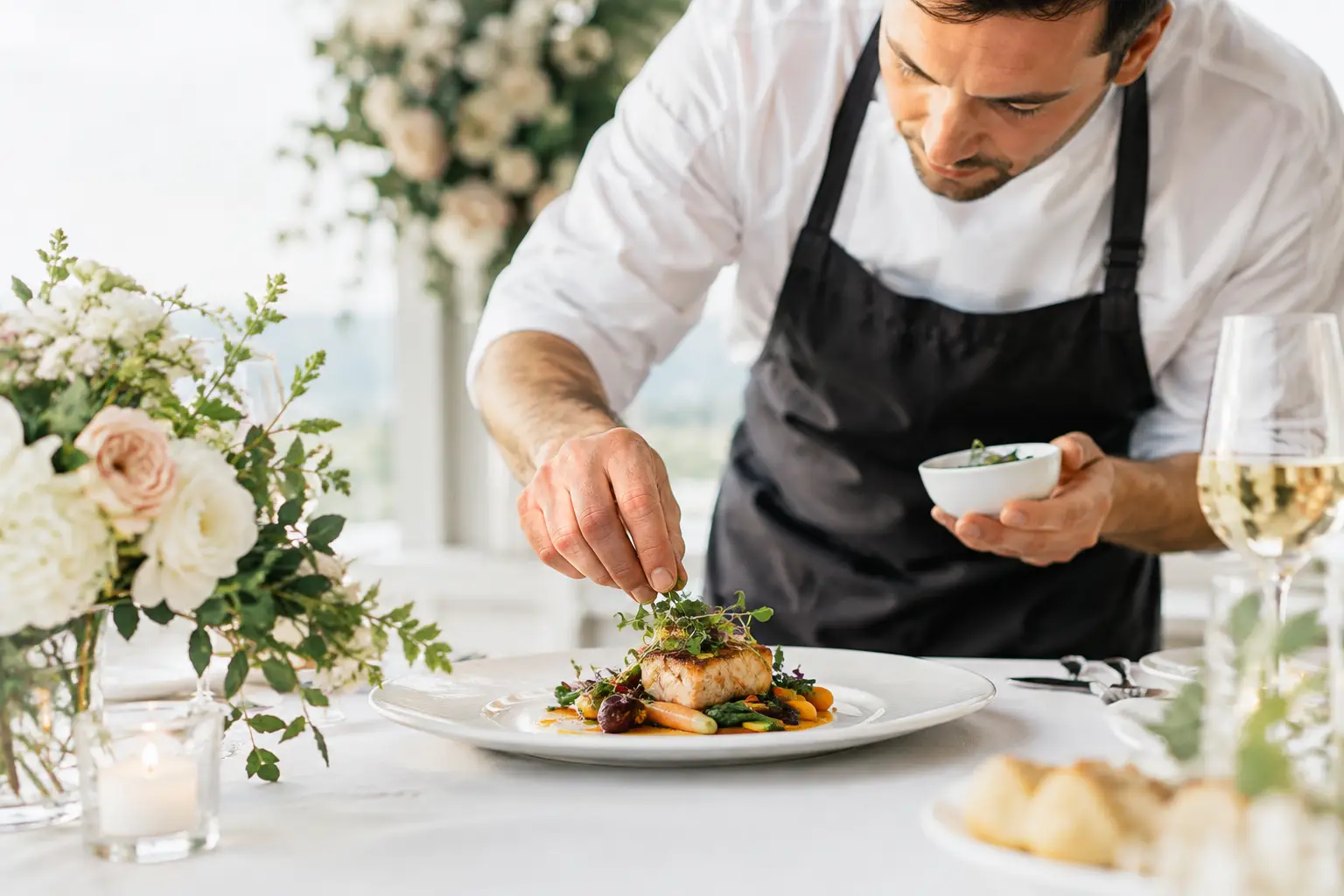
Chef Curated Wedding Menus That Feel Personal
Chef curated wedding menus bring seasonal flavor, thoughtful service, and a personal touch to your waterfront celebration in Harford County, Maryland.
A wedding menu is often remembered in small, vivid details: a passed appetizer enjoyed on the patio as the Bush River catches the late-afternoon light, a first course that feels considered rather than expected, or the moment a guest asks for the name of the entrée. Chef curated wedding menus create those moments by giving food the same attention as the flowers, music, and setting. They turn dinner from a required part of the timeline into a genuine expression of the celebration.
For couples planning a waterfront wedding, the menu has an especially meaningful role. It should match the season, suit the rhythm of the day, and make every guest feel well cared for. That does not mean choosing the most elaborate dish on the page. It means making thoughtful choices with a culinary team that understands how flavor, presentation, service, and logistics work together.
What Makes a Wedding Menu Chef Curated?
A chef-curated menu begins with intention. Rather than asking couples to select a standard package without context, the process considers their wedding style, guest list, time of year, and the experience they want to create. A relaxed summer celebration may call for bright seafood, garden-forward accompaniments, and refreshing cocktails. A formal autumn reception may feel more fitting with richer sauces, roasted seasonal vegetables, and a warm, welcoming dessert course.
The chef’s role is not simply to prepare the meal. It is to shape a menu that works as a whole. Each course should have its own character while still feeling connected to the next. The menu must also be practical for the event format. A beautiful plated entrée is only successful if it can be served at the right temperature to every table, on time, and with the same polished presentation from the first plate to the last.
This balance is where experience matters. Couples may have a favorite dish or an inspiring restaurant meal in mind, but a wedding menu needs to serve a room full of people gracefully. An experienced culinary and service team can honor that inspiration while guiding it toward choices that perform beautifully at an event.
Start With the Feeling You Want Guests to Have
Before discussing proteins or dessert flavors, consider the atmosphere you want to set. Do you picture a refined black-tie dinner with a quiet sense of occasion? An easygoing waterfront evening where guests mingle over small plates? A family-centered celebration with familiar flavors presented in an elevated way? These answers give the menu direction.
Cocktail hour is often the best place to introduce personality. Passed hors d’oeuvres can feel sophisticated and social, while food stations invite guests to move, browse, and start conversations. A raw bar or seafood station may suit a waterfront setting particularly well. A carving station can bring warmth and theater to a fall or winter reception. For some couples, a blend of passed appetizers and one substantial station offers the right balance between polish and abundance.
Dinner can then carry that feeling forward. Plated service creates a classic, composed experience and gives the evening a natural pace. A duet entrée may offer variety without asking guests to make a choice in advance. Stations and buffet-style service can be generous and interactive, especially for a more relaxed reception. There is no universally better format. The right choice depends on your guest count, timeline, budget priorities, and how you want the room to feel once the dance floor opens.
Let the Setting Inform the Menu, Not Limit It
A waterfront venue provides inspiration, but the menu does not need to be built entirely around seafood. Local crab or a thoughtfully prepared fish course can be a wonderful nod to Maryland, yet couples should choose foods they truly enjoy. The most memorable menu feels connected to the location and season without becoming a theme.
A spring wedding might pair a tender beef entrée with crisp vegetables and a citrus-forward salad. In summer, grilled elements, seasonal fruit, and lighter sauces can feel especially appropriate. Fall menus often welcome roasted flavors and deeper notes, while winter celebrations can lean into elegant comfort through slow-braised dishes, creamy accompaniments, and warm passed bites. A skilled chef uses seasonality to make a menu feel fresh, not restrictive.
Build a Menu With Range and Rhythm
The strongest menus offer enough variety for guests to feel considered without becoming overly complicated. That usually means balancing familiar favorites with one or two distinctive touches. If the entrée is rich, a bright starter can keep the meal from feeling heavy. If cocktail hour includes several indulgent selections, dinner may benefit from a cleaner, more restrained first course.
Dietary needs should be part of the conversation from the beginning, not handled as an afterthought. Vegetarian, vegan, gluten-sensitive, and allergy-conscious guests deserve a meal that feels intentional and complete. A chef-curated approach goes beyond setting aside a plain plate. It creates alternatives with flavor, texture, and presentation worthy of the occasion.
It also helps to think about the full evening. Couples sometimes focus so closely on the entrée that they overlook late-night hospitality. A well-timed snack after several hours of dancing can be one of the most appreciated details of the night. The choice can be playful, nostalgic, or refined, but it should fit the celebration rather than feel randomly added to the schedule.
How Chef Curated Wedding Menus Support a Smoother Day
Food affects more than guest satisfaction. It affects timing, flow, and the overall ease of the reception. When your venue, culinary team, and event coordination are working together, decisions about the menu can support the rest of the day rather than compete with it.
For example, a longer cocktail hour can give the wedding party time for waterfront portraits while guests enjoy well-paced service and substantial appetizers. A plated dinner can be coordinated around toasts, sunset views, and special dances. Stations may be arranged to encourage movement without creating bottlenecks. Bar selections can be tailored to complement the meal and keep service efficient.
This is a practical advantage of working with an in-house culinary and hospitality team. The people designing the menu understand the room, the kitchen, the service plan, and the event timeline. At Water’s Edge Events Center, that coordination allows Executive Chef Manny Martinez and the event team to build menus that feel personal while remaining grounded in the details that make a reception run smoothly.
Questions Worth Asking During Menu Planning
A productive menu conversation is not only about what sounds delicious. Ask how the menu will be presented, when courses will be served, and how special meals will be identified and delivered. If you are considering a station-style meal, ask how the layout will prevent long lines. If you have guests traveling from out of town or a wide range of ages, discuss the level of familiarity and variety that will make everyone comfortable.
You should also ask what can be customized. Some changes are simple and meaningful, such as incorporating a family recipe flavor profile, a favorite late-night bite, or a signature cocktail that reflects how you met. Other requests may involve trade-offs in preparation, sourcing, staffing, or cost. A professional team should be candid about those considerations and offer alternatives that preserve the spirit of your idea.
Tastings are especially valuable because they let couples evaluate more than flavor. Notice portion sizes, sauces, presentation, and how each selection feels alongside the others. Bring honest feedback, but stay open to the chef’s perspective. A small adjustment to seasoning, garnish, or pairing can make a significant difference on the wedding day.
Personal Does Not Have to Mean Complicated
Some of the most personal menus are built from a few clear choices made well. Perhaps you serve the appetizer that reminds you of your first trip together, feature Maryland ingredients in a subtle way, or offer a dessert that feels like home. These details create connection without turning the menu into a collection of unrelated ideas.
The goal is not to impress guests with complexity. It is to welcome them generously. When food is beautifully prepared, thoughtfully paced, and aligned with the celebration, guests feel that care from their first drink through the final bite.
As you plan, choose dishes that make you look forward to taking your seats at the reception. Years from now, the menu should bring back more than a list of courses. It should recall the people around your table, the view beyond the windows, and the feeling that your wedding was unmistakably yours.


