
All Inclusive Venue Versus Caterer: Which Fits?
Compare an all inclusive venue versus caterer for weddings and events, from costs and menus to coordination, service, and the guest experience overall.
The all inclusive venue versus caterer decision can shape far more than your menu. It affects who manages the timeline, how clearly costs are presented, how quickly details are resolved, and whether your guests experience the day as polished and effortless. For a waterfront wedding, a corporate gala, or a milestone dinner, the right choice is the one that gives you confidence in both the vision and the execution.
All Inclusive Venue Versus Caterer: The Core Difference
An all-inclusive venue generally brings the setting, food, beverage, service staff, event coordination, tables, chairs, and many operational details under one experienced team. The exact inclusions vary, so the phrase should never replace a careful review of the proposal. Still, the model is designed to give hosts one central point of contact and one team accountable for the guest experience.
A separate caterer is typically hired to provide food and, depending on the agreement, bar service, rentals, staffing, or kitchen equipment. You may select a venue independently and build your own vendor team around it. This approach can offer more freedom, particularly when you have a highly specific culinary vision or a meaningful venue that does not provide food service.
Neither path is automatically better. The practical question is where you want the responsibility to sit. With separate vendors, the host or planner often becomes the bridge between the venue, caterer, rental company, bar provider, florist, and entertainment. With an all-inclusive venue, that bridge is usually built into the service.
Start With the Guest Experience You Want to Create
Guests do not see a spreadsheet or a stack of vendor contracts. They notice whether cocktails arrive on time, whether dinner service feels relaxed, whether the room turns over smoothly between a ceremony and reception, and whether someone is available when a last-minute need arises.
That is where an integrated venue team can make a meaningful difference. The culinary team knows the rooms, loading access, service corridors, available equipment, and timing of the day. The event coordinator knows when photographs are ending, when a presentation needs to begin, and when guests should be guided toward the next moment. Food, beverage, service, and logistics work from the same plan rather than several separate versions of it.
For weddings, this can protect the emotional rhythm of the celebration. For business events, it can protect the agenda. A meeting that begins with coffee ready, audiovisual equipment tested, and breakfast served on schedule sends a very different message than one that begins with a search for extension cords and an update on late catering delivery.
Cost Comparison Is More Than the Menu Price
Separate catering can appear less expensive at first because the quoted menu price may be lower than a venue package. But a true comparison requires looking beyond the cost per guest. Off-site catering often involves delivery, setup, staffing, kitchen access or equipment, china and glassware, linens, bar needs, service charges, transportation, and cleanup. Some venues also charge outside-caterer fees, require additional insurance, or limit access times for setup and breakdown.
An all-inclusive proposal may look larger because more of those elements are already visible in one place. That clarity can be valuable. Instead of comparing a room rental to a food package, compare the complete cost of hosting the event from arrival through final cleanup.
Ask each option what is included in the service charge, whether gratuity is separate, and which rentals are necessary for your guest count and menu format. Confirm taxes, bartender requirements, cake-cutting fees, overtime, event security, audiovisual use, and any minimums. A transparent proposal does not mean every detail is free. It means you can see what the day requires before you commit.
Menu Flexibility Can Exist In-House
One common assumption is that choosing an all-inclusive venue means accepting a fixed menu. That may be true at some locations, but it is not the only model. A culinary-driven venue can offer the convenience of in-house service while still developing a menu around your season, style, dietary needs, and guest experience.
The best question is not simply, “Can I customize the menu?” Ask how customization works. Can the chef adjust a plated entrée, create a station inspired by your family traditions, accommodate vegetarian and gluten-sensitive guests with equal care, or design a late-night bite that suits the energy of the evening? Can the bar program complement the meal rather than feel like an afterthought?
A separate caterer may be the stronger choice when your event depends on a very specialized cuisine that an in-house team does not offer, or when you have a longstanding relationship with a particular chef. But if the venue’s culinary team is capable, it can be a considerable advantage to have the people preparing the meal also responsible for serving it in their own space.
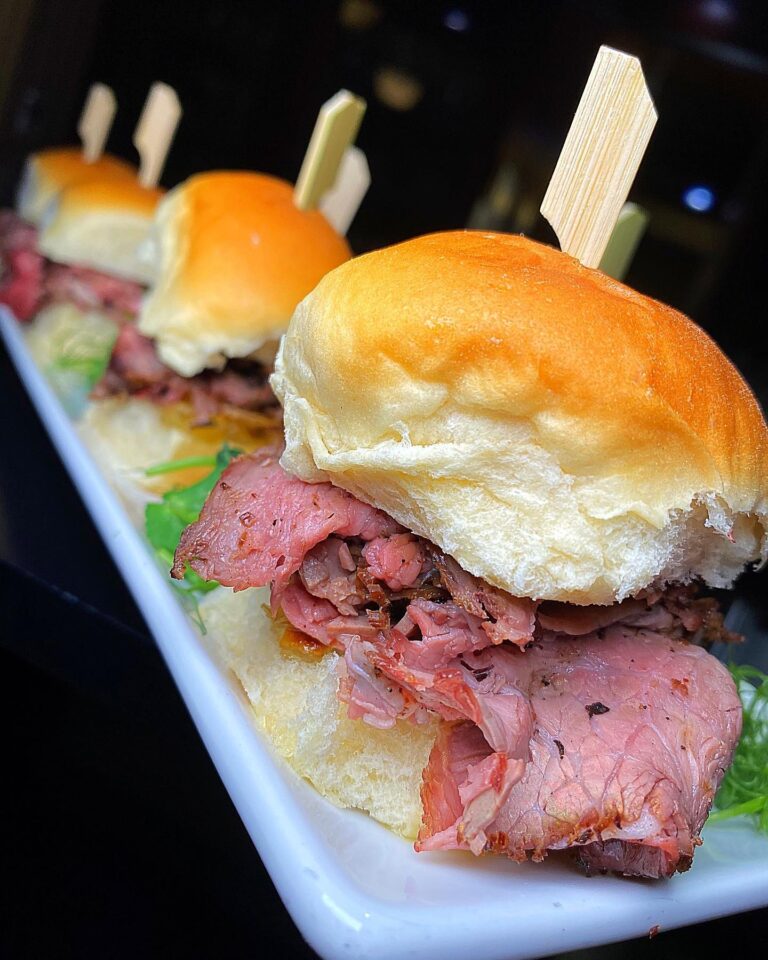
At Water’s Edge Events Center, for example, Executive Chef Manny Martinez and the hospitality team can shape menus ranging from polished plated dinners to lively food stations, cocktails, and barbecue-inspired gatherings. The goal is not a one-size-fits-all package. It is food that belongs naturally in the celebration.
Coordination Is Often the Deciding Factor
A beautiful venue and excellent caterer can absolutely work well together. The question is how much coordination the combination requires from you. When separate vendors are involved, someone needs to confirm floor plans, access windows, catering prep space, refrigeration, power, staffing arrival times, trash removal, and the timing of service. An independent wedding planner can manage those details, but that is another relationship and expense to consider.
An all-inclusive venue simplifies those conversations because the team works in the space every day. They understand how the room can be set, where a buffet or station will flow best, how many guests can be served efficiently, and when to adjust a plan for weather or a delayed program.
This is especially useful for waterfront celebrations, where the view may guide the ceremony location or cocktail hour plan, but weather conditions can call for a poised backup plan. It is also useful for corporate events with presentations, breakout sessions, sponsor needs, and a firm end time. Fewer handoffs usually mean fewer opportunities for a detail to be missed.
When a Separate Caterer May Be the Better Choice
There are circumstances where a caterer and venue booked separately make excellent sense. A family property, museum, garden, or nontraditional space may be central to the occasion. You may need a particular cultural menu, have a planner who is managing a complex vendor roster, or want the creative control of sourcing every element individually.
That route works best when responsibilities are clearly assigned. Make sure the caterer has visited the site, understands the kitchen situation, and has documented what they will supply. Confirm whether the venue provides tables, chairs, linens, glassware, staging, audiovisual equipment, parking support, and a rain plan. A strong caterer will welcome those questions because they protect the quality of their work as much as they protect your event.
Questions That Make the Choice Clearer
Before signing, ask both options how they handle the parts of an event that guests never see but always feel:
- Who owns the master timeline and communicates changes on the event day?
- Who provides staffing for setup, meal service, bar service, and cleanup?
- What happens if weather changes the plan or the program runs late?
- Which rentals, fees, and service costs are not included in the initial estimate?
- How are dietary accommodations prepared, labeled, and served?
- Can the team support your preferred service style, from a formal plated meal to stations or a reception-style gathering?
Pay attention to the quality of the answers, not just the promise of flexibility. Specific answers show that a team has considered the realities of service, guest movement, and contingency planning.
Choose the Partnership, Not Just the Package
The right event partner should make the planning process feel more organized, not more complicated. If you value a distinctive setting, memorable cuisine, and a team that can bring many moving parts together, an all-inclusive venue may offer the most reassuring path. If your priorities call for an unconventional location or a specialty caterer, a separate vendor approach can be equally rewarding with the right planning support.
Your celebration deserves more than a room and a meal arranged side by side. Choose the team that listens carefully, explains the details plainly, and can turn your plans into a gathering where every guest feels well cared for.