
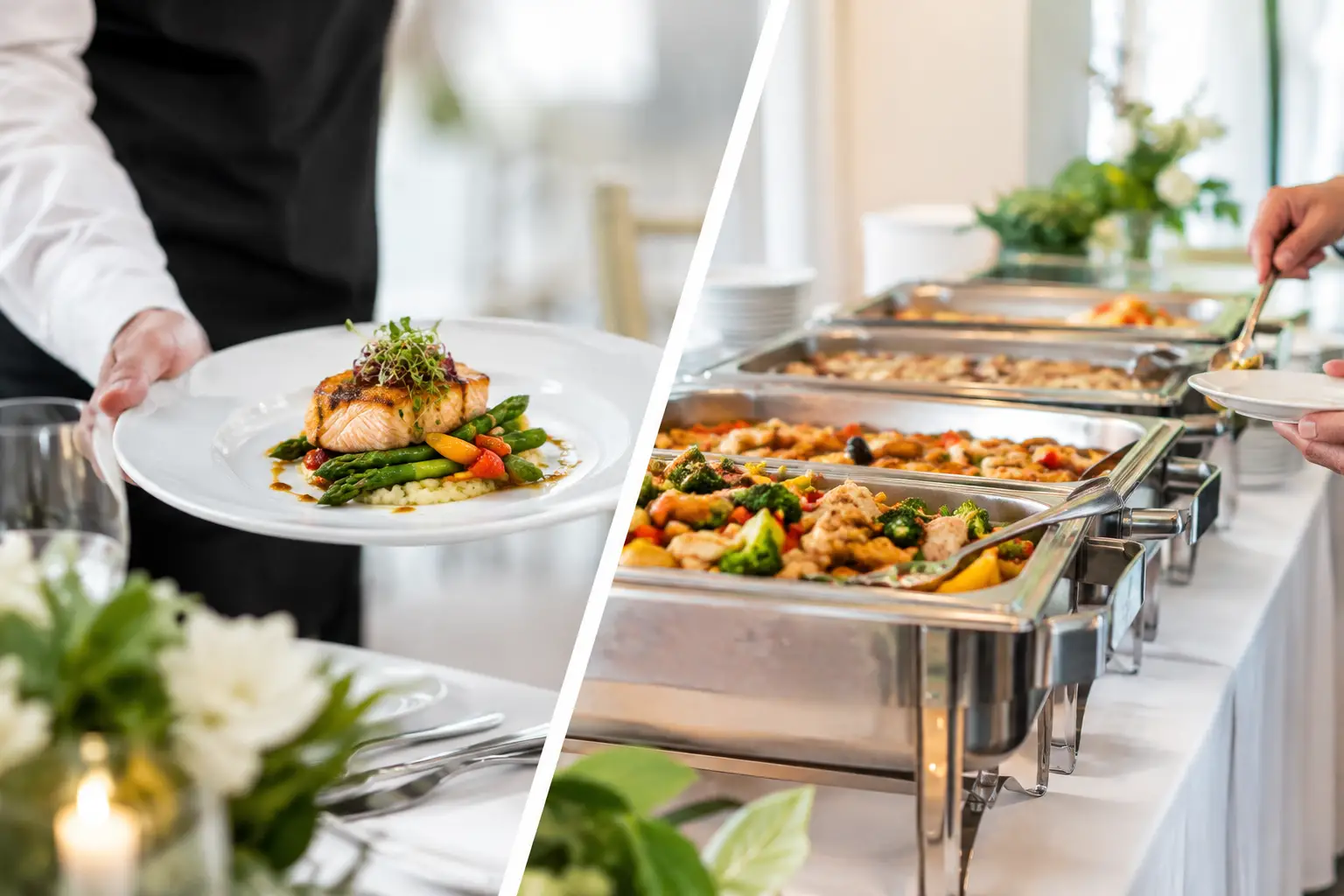
Plated Dinner Versus Buffet Service for Events
Compare plated dinner versus buffet service for weddings and events, from guest flow and menu choice to budget, timing, and the atmosphere you want most.
The dinner format shapes far more than what arrives on each guest’s plate. It affects the pace of toasts, the energy on the dance floor, the conversation at each table, and how your celebration feels from the first course to the final farewell. When considering plated dinner versus buffet service, the best choice is the one that supports your guest count, priorities, menu vision, and the experience you want to host.
For a waterfront wedding, a company gala, or a milestone celebration, both options can feel polished and generous. The difference is in the rhythm of the room. A plated meal offers a composed, restaurant-style experience, while a buffet invites movement, variety, and a more social flow.
What a Plated Dinner Experience Offers
With plated service, guests remain seated while a professional service team presents each course at the table. Guests typically select an entrée in advance, allowing the culinary team to prepare and serve each meal with thoughtful timing and presentation.
A plated dinner is especially well suited to events with a formal program. If you are planning speeches, awards, a first dance, or a carefully timed evening, seated service gives the event a natural structure. Everyone is in the room, at their tables, and ready to share the moment together.
The visual effect is part of its appeal. A beautifully composed entrée, delivered in unison, brings a sense of occasion to the meal. For couples who envision an elegant reception with candlelight, florals, and a refined progression from cocktail hour through dessert, plated service often feels like a natural extension of that vision.
Strengths of plated service
Plated dinners offer dependable timing once the meal begins. They can also make it easier to manage a tightly planned schedule, since guests are not leaving their tables in waves. That matters for wedding receptions with multiple formal moments and for corporate events where a keynote, recognition program, or presentation follows dinner.
They also provide a more curated menu experience. Rather than asking guests to build a plate from several offerings, the host and culinary team create a complete course with complementary flavors, sides, and presentation. This can make the meal feel particularly intentional.
There are practical considerations, too. Collecting entrée selections and dietary requirements before the event requires advance coordination. For many hosts, that effort is worthwhile because it helps ensure guests receive meals suited to their preferences and needs. Clear place cards and a well-organized seating plan are essential for smooth service.
When a Buffet May Be the Better Fit
Buffet service brings a different kind of hospitality to the room. Guests are invited to choose from a thoughtfully arranged selection of entrées, sides, salads, and accompaniments, often returning with a plate that reflects their own tastes.
This format works beautifully for celebrations where menu variety is a leading priority. A buffet can accommodate familiar favorites alongside seasonal dishes, vegetarian selections, and distinctive culinary touches without requiring each guest to commit to one entrée weeks in advance. It is often an appealing choice for family celebrations, holiday parties, graduations, and relaxed wedding receptions where guests know one another and enjoy mingling.
A well-designed buffet is not simply a line of chafing dishes. It can be part of the event’s presentation, with attractive displays, clearly labeled dishes, and a menu built around color, abundance, and balance. At Water’s Edge Events Center, in-house catering allows hosts to shape that experience around the occasion, whether the menu leans toward elevated comfort food, seasonal coastal flavors, a barbecue-inspired gathering, or an international culinary influence.
Strengths of buffet service
The most obvious benefit is choice. Guests can decide how much they would like and select the items that appeal to them most. This can be especially helpful when your guest list spans different ages, appetites, and dining preferences.
Buffets also encourage guests to move through the room. That movement creates opportunities for conversation beyond assigned tables, which can be ideal for a reunion-style celebration or a company event designed to build connection across teams.
The trade-off is timing. Guests will be served by table or in groups to keep the experience orderly, but the meal naturally unfolds in waves. Larger guest counts need a clear release plan and enough space for lines to form comfortably. A seasoned event team will account for this in the floor plan, so guests can enjoy the menu without creating congestion near the dance floor, bar, or program area.
Plated Dinner Versus Buffet Service: Key Planning Factors
Neither service style is automatically more luxurious, more affordable, or more guest-friendly. Those details depend on the menu, the scale of the event, staffing needs, and how the room is arranged. The most useful question is not which format is universally better. It is which one makes your particular event feel effortless for guests.
Consider the tone of your event
A black-tie wedding, formal gala, or client-facing awards dinner often benefits from plated service because it reinforces a composed, attentive atmosphere. For an anniversary party with several generations present, a buffet may feel warmer and more flexible. A wedding can suit either approach. The deciding factor is whether you picture a more choreographed evening or a celebration with an easy, lively flow.
Consider the menu itself
Some dishes hold and travel beautifully for buffet service, while others are at their best when plated and served immediately. Your catering team can guide this decision based on the season and your culinary preferences.
If you have a strong vision for a multi-course menu or want each guest to experience a specific entrée presentation, plated service may be the stronger choice. If your menu includes several proteins, bold sides, or dishes guests may want to sample together, a buffet gives that variety room to shine.
Consider guest comfort and dietary needs
Both formats can accommodate vegetarian, vegan, gluten-sensitive, allergy-aware, and other dietary requests when they are planned in advance. With plated service, accommodations are delivered directly to the guest. With a buffet, clear labeling and a thoughtful layout help guests identify suitable options with confidence.
For a buffet, it is wise to include enough range that guests with dietary needs have a complete meal, not simply one side dish. For plated service, encourage guests to respond by the requested deadline so the culinary and service teams can prepare accurately.
Consider the evening’s timeline
A plated dinner gives your timeline more predictability. It is often easier to schedule speeches between courses or plan a transition to dancing soon after dessert. If your reception includes several special traditions, this structure can ease the pressure on the evening.
A buffet can make room for a more relaxed schedule, particularly if you prefer conversation and mingling to take precedence over formal programming. It may also work well for longer events where guests arrive at slightly different times or where dinner is only one part of a larger gathering.
Consider the room layout
Service style should be part of the floor-plan conversation from the beginning. A plated dinner keeps table areas calm and open, allowing room for a spacious dance floor or presentation area. A buffet requires dedicated space for food displays and a guest path that feels intuitive.
At a waterfront venue, layout also affects how guests enjoy the setting. You may want easy access to river views, outdoor gathering areas, or sunset photographs without interrupting dinner service. Coordinating the meal format with those moments helps the entire event feel well paced rather than over-scheduled.
A Third Option: Stations and Hybrid Service
If the choice feels too limiting, a hybrid approach may be the answer. Chef-attended stations, family-style components, or a plated entrée paired with a shared starter can offer the polish of structured service with the variety guests enjoy.
This approach is particularly useful when food is central to the celebration. A cocktail hour with substantial stations can create a festive start, followed by a shorter plated dinner that keeps the evening moving. For corporate gatherings, stations may support networking before guests settle in for a presentation or dessert reception.
The right format is the one that lets your guests feel cared for without drawing attention to logistics. Picture the moments you value most: a quiet toast at candlelit tables, guests comparing favorite dishes over dinner, a smooth transition into dancing, or an open room filled with conversation. Start there, and let the meal service support the celebration you are creating.


