
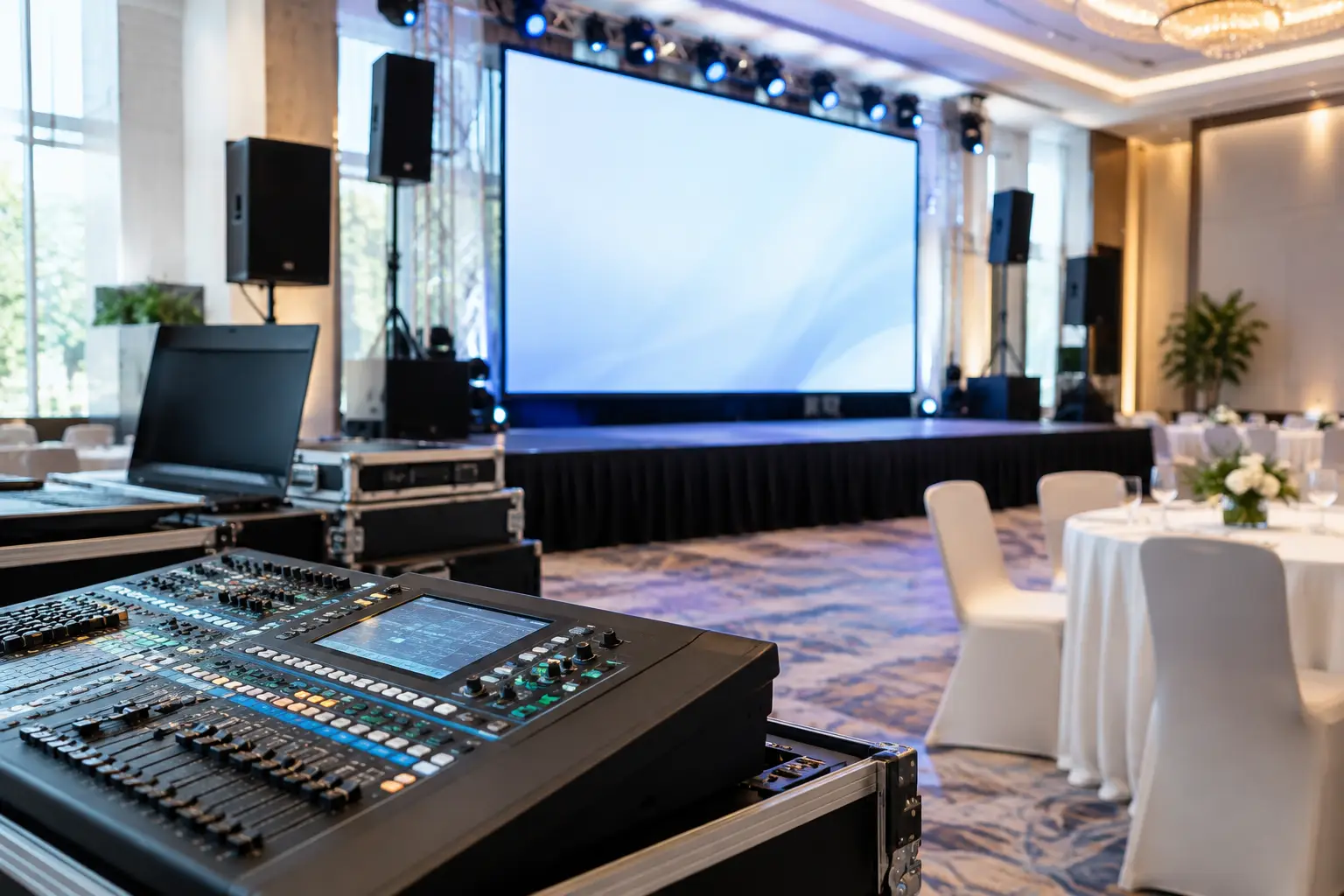
Event Venue Audiovisual Equipment That Delivers
Choose event venue audiovisual equipment that supports clear presentations, memorable toasts, and confident planning for weddings, meetings, and galas.
A wedding toast loses its warmth when guests at the back cannot hear it. A board presentation loses momentum when the projector connection fails just as the meeting begins. Thoughtfully planned event venue audiovisual equipment protects those meaningful moments, allowing hosts to focus on their guests rather than the technology in the room.
For weddings, corporate gatherings, galas, and private celebrations, audiovisual planning is not simply a technical detail. It shapes how well guests can participate, how polished an event feels, and how confidently the program moves from one moment to the next. The right setup should suit the room, the guest count, and the purpose of the gathering without overwhelming the experience.
Choosing Event Venue Audiovisual Equipment for Your Event
The best audiovisual plan begins with a simple question: what do your guests need to see, hear, or share? The answer will look different for a waterfront wedding than it will for a sales conference or nonprofit gala.
A wedding may need wireless microphones for the officiant and vows, dependable sound for a playlist or DJ, and a screen for a photo montage during dinner. A corporate meeting may require a large display, presentation connectivity, microphones for panelists, and clear audio for remote attendees. A gala may combine all of those elements with stage lighting, video tributes, live entertainment, and an awards program.
Rather than selecting equipment from a generic checklist, consider the event schedule from arrival through the final farewell. Note every moment when someone will speak, perform, present, play a video, or need to address the room. This helps the venue team identify where equipment should be placed and where a technician or event coordinator can prevent avoidable interruptions.
Sound Is the First Priority
Guests are often willing to forgive a small visual imperfection. They are far less likely to enjoy a ceremony, speech, or presentation they cannot hear. Audio quality depends on more than having a microphone available. The size and layout of the room, ceiling height, guest count, background noise, speaker placement, and the number of people speaking all affect the result.
Wireless handheld microphones are well suited to toasts, awards, and audience questions. Lapel or headset microphones can be a more comfortable choice for an officiant, presenter, or keynote speaker who needs to move freely. For a panel discussion, each participant should have a dedicated microphone whenever possible. Sharing a single microphone among several speakers can slow the program and create uneven volume.
Music deserves the same attention. A carefully selected first-dance song, walk-up music for an award recipient, or a quiet instrumental soundtrack during cocktails should feel intentional, not too loud or too faint. Ask how music sources will connect to the venue system, whether a DJ or band will use separate equipment, and who will manage volume changes throughout the event.
Screens and Displays Should Serve the Room
A screen that looks generous in an empty room can become difficult to see once guests are seated. Sightlines matter. Guests should not need to turn sharply, look around columns, or strain past floral arrangements to follow a presentation or watch a video.
For business events, consider the amount of information on each slide. Detailed charts and smaller text require a larger, brighter display than a simple photo-forward presentation. If attendees are seated at rounds, two displays may offer a better experience than one screen at the front of the room.
For social events, a display can add warmth and personality without becoming the center of attention. Engagement photos, family videos, tribute slideshows, and custom graphics can enhance a reception or milestone celebration when they are timed thoughtfully. Keep video segments concise, test the sound in advance, and confirm that all files are in a compatible format.
The Venue Matters as Much as the Equipment
Equipment is only as effective as its setting. A professional venue considers how sound travels through the space, where speakers can be positioned, how screens fit into the room design, and where power access is available. These details are particularly valuable when an event includes dining, décor, entertainment, and a formal program in the same space.
At Water’s Edge Events Center, audiovisual planning can be coordinated alongside room setup, catering service, and the event timeline. That integrated approach helps prevent common conflicts, such as a screen blocking a waterfront view, a speaker interfering with guest tables, or a presentation beginning while service is still at its busiest.
Lighting also deserves a conversation. Natural light is beautiful for a daytime celebration, especially near the water, but it can affect screen visibility. A presentation scheduled during a bright afternoon may need a different display plan than one delivered after sunset. Similarly, dimming the room for a video should not make it difficult for guests to dine, take notes, or move safely.
Plan for Transitions, Not Just the Main Program
The most polished events are often defined by what happens between the major moments. Consider the transition from cocktails to dinner, from dinner to speeches, or from a meeting presentation to a breakout session. Will the microphone move with the speaker? Will the music change at the right time? Does the screen need to be lowered or removed before dancing begins?
A detailed event timeline gives each transition a home. It also clarifies responsibilities. A designated point person should know who cues the music, advances the presentation, adjusts lighting, and responds if a guest speaker needs assistance. For a smaller private dinner, that may be a venue coordinator. For a large conference or gala, it may be an audiovisual technician working alongside the event team.
Questions to Ask About Event Venue Audiovisual Equipment
Before signing a venue agreement or finalizing your event plan, ask what audiovisual equipment is included and what may require an additional rental. Confirm the number and type of microphones available, display or projector options, sound system coverage, internet access, and any staffing support during the event.
It is also wise to ask about connections. Presenters may arrive with laptops that use HDMI, USB-C, or other adapters. A simple compatibility issue can delay a program if it is discovered five minutes before guests arrive. Share presentations, videos, and music files with the appropriate team in advance, and bring backup copies on a flash drive or secondary device.
For hybrid meetings, get specific about the plan for remote participants. A standard room microphone may not provide the clarity needed for people joining by video conference. Camera placement, audio feed, internet reliability, and an on-site test with the meeting platform all deserve attention. Hybrid events can work beautifully, but they require more planning than an in-person presentation.
Finally, ask how the venue handles contingencies. Technology is dependable when it is properly maintained and tested, but a thoughtful backup plan still matters. A second microphone, spare adapter, downloaded copy of a presentation, and a contact person who understands the setup can turn a potential disruption into a brief pause.
Keep the Guest Experience in View
Audiovisual equipment should support the feeling you want guests to carry home. For a wedding, that may mean every loved one hears the vows and every table enjoys the speeches. For a corporate program, it may mean presenters appear prepared, attendees can follow the discussion, and remote colleagues feel included. For a gala, it may mean an emotional mission video lands with the clarity it deserves.
The goal is not to fill a room with technology. It is to make communication feel effortless for the people in it. When audiovisual planning is considered early and coordinated with the room layout, meal service, décor, and schedule, the equipment fades into the background while the occasion takes center stage.
Bring your preliminary agenda, guest count, and presentation needs to your venue conversation early. A few well-timed questions can create a more comfortable, confident experience for everyone in the room.


