
Choosing a Team Building Venue in Maryland
Find a team building venue Maryland leaders can trust for focused meetings, memorable meals, waterfront views, and stress-free event coordination support.
A productive off-site should not feel like another meeting moved to a different room. The right team building venue Maryland organizations choose gives people a reason to step away from routine, reconnect with colleagues, and return to work with greater clarity. That requires more than a scenic setting or a catered lunch. It requires thoughtful pacing, comfortable spaces, reliable technology, and hospitality that keeps the day moving.
For HR leaders, executive assistants, office managers, and business owners, the strongest team events balance purpose with enjoyment. Your agenda may include quarterly planning, a leadership workshop, recognition moments, or a hands-on activity. The venue should make each portion feel intentional while taking logistical pressure off the person responsible for organizing it.
Start With the Purpose of the Day
Before comparing rooms, define what success looks like when the event ends. A department that needs to solve a difficult operational issue requires a different atmosphere than a team gathering designed to celebrate a major milestone. Both can benefit from being off-site, but their schedules, room setup, and food service should be planned differently.
For a strategy-focused gathering, prioritize a private space with presentation capabilities, comfortable seating, and enough room for breakout conversations. A more social team-building event may call for a flexible layout, space for a cocktail reception or food stations, and an appealing backdrop that encourages people to linger and talk.
Many teams need both. A morning of focused discussion followed by a relaxed waterfront lunch or afternoon reception can make the work feel more rewarding without forcing the event into a rigid either-or format. The most effective venue partner will ask about your goals early, then recommend an event flow that supports them.
What a Team Building Venue in Maryland Should Provide
The venue itself sets the tone, but the details determine whether guests can stay engaged. When evaluating options, look beyond the capacity number and consider the full guest experience from arrival through departure.
Flexible Space for the Way Your Team Works
A theater-style room may be ideal for a company-wide presentation but less useful for a workshop that depends on conversation. Ask whether the room can be arranged in rounds, classroom seating, a U-shape, or smaller discussion clusters. Consider whether there is a separate area for meals, breaks, or an evening social hour.
Flexibility is especially valuable for organizations hosting a mix of content. Moving from presentations to collaborative exercises is easier when the room can evolve with the agenda, rather than requiring guests to remain seated in the same configuration all day.
Technology That Supports, Rather Than Distracts
Nothing pulls attention from a leadership presentation faster than unreliable audio or a screen that is too small for the room. Confirm the availability of audiovisual equipment, microphones, display options, Wi-Fi, and on-site support before finalizing your program.
If remote employees, speakers, or clients will participate, talk through video conferencing needs in advance. If your team plans to use music, award presentations, or branded visuals, share those details with the venue coordinator as well. A polished event often comes down to preparation that guests never have to notice.
Hospitality Built Into the Experience
Food is not a pause from team building. It is one of the places where connection happens naturally. Colleagues who rarely work together may start a conversation while choosing from a chef-attended station, enjoying a seasonal lunch, or gathering for cocktails at the end of the day.
A venue with in-house culinary planning offers more control over the experience than a basic room rental. Look for menus that can match the tone of your gathering, whether that means a casual barbecue, an elevated plated dinner, passed appetizers, or a customized combination of stations and small plates. Dietary needs deserve the same careful attention. When every guest has a thoughtful option, everyone can participate comfortably.
Choose a Setting That Changes the Energy
A change of scenery has practical value. Leaving the office helps teams separate daily interruptions from the conversations in front of them. Natural light, open views, and welcoming common areas can also make a full day of meetings feel less confined.
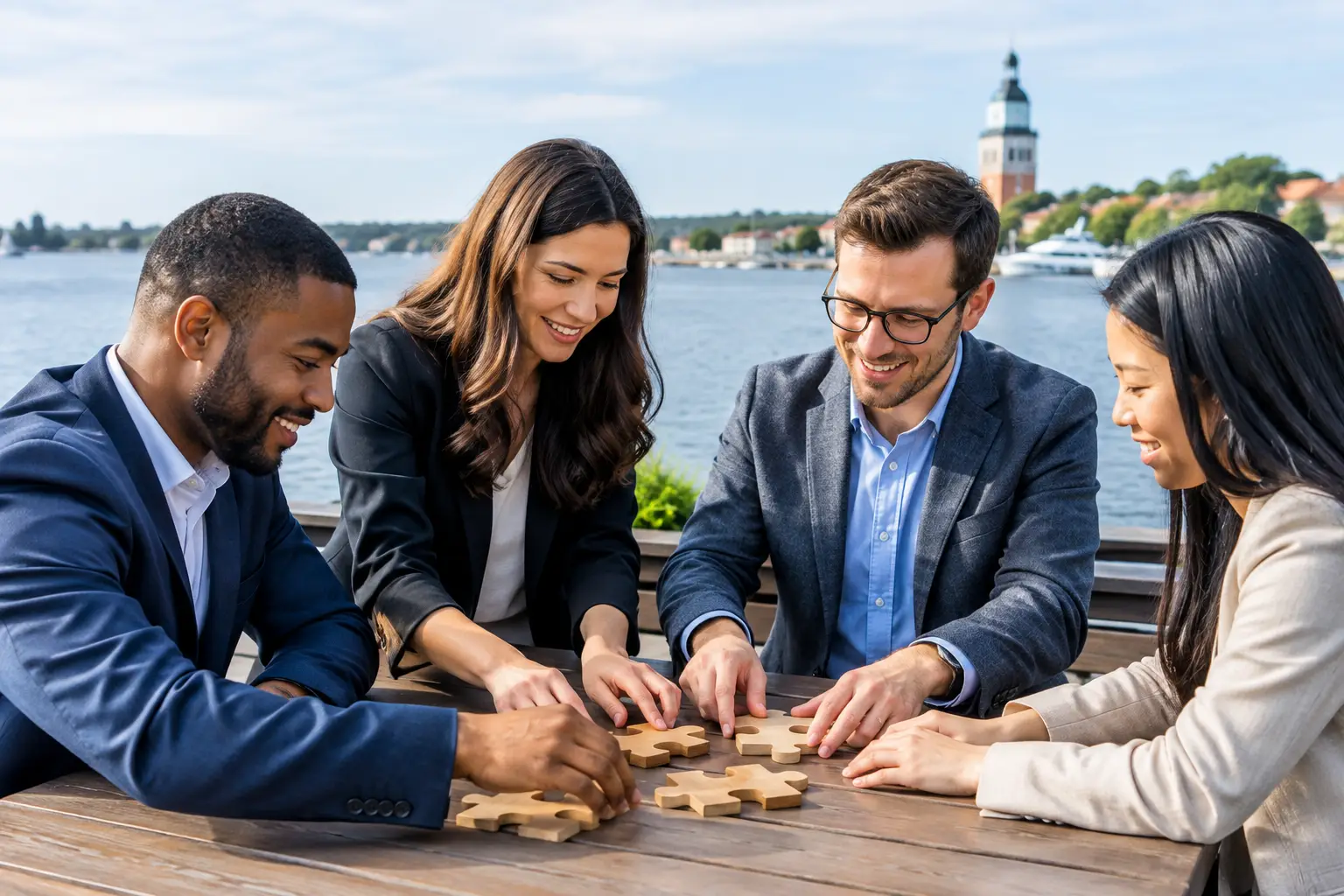
Waterfront settings are particularly effective for corporate events because they create a sense of occasion without asking guests to travel far from Maryland’s major business communities. On the Bush River in Belcamp, Water’s Edge Events Center offers that sense of retreat alongside the infrastructure needed for professional meetings and celebrations. The setting can frame a leadership retreat, client appreciation event, holiday gathering, or employee recognition dinner with equal ease.
Scenery alone is not enough, however. Consider access, parking, arrival instructions, and weather contingencies for any outdoor component. A beautiful terrace or waterfront lawn is a valuable addition when there is also a well-planned indoor option ready to support the event.
Build an Agenda With Room to Connect
Over-scheduling is one of the easiest ways to undercut a team event. When every minute is assigned, guests may leave with a fuller notebook but fewer meaningful conversations. Plan focused sessions, then allow breathing room around them.
A useful rhythm might include a welcome and coffee service, a morning working session, a shared lunch, an interactive activity or breakout period, and a closing reception or dinner. The structure can be more formal or more relaxed depending on your goals, but transitions should feel natural. A venue coordinator can help account for service timing, room resets, and the moments when guests need a break.
Team building activities do not have to be elaborate to be effective. Guided discussion prompts, cross-department problem solving, recognition remarks, cooking-oriented experiences, or a casual reception can all create genuine interaction. The best choice depends on your team culture. Forcing a high-energy activity on a reserved leadership group may feel awkward, while giving a newly expanded sales team nothing but presentations may miss an opportunity to build rapport.
Ask Planning Questions Before You Sign
A dependable venue team makes planning feel lighter, but clear questions still matter. Discuss the event timeline, minimum and maximum capacities, menu deadlines, access for vendors or facilitators, setup and breakdown expectations, and the point person available on event day. If alcohol service is part of the plan, ask about bar options and how the service style fits the schedule.
It is also wise to discuss the details that are easy to overlook: signage, registration tables, coat storage, accessibility, dietary accommodations, and space for awards or materials. These are not minor considerations. They shape whether guests arrive feeling welcomed and whether the organizer can participate instead of spending the day troubleshooting.
For larger gatherings, request a clear picture of how the venue will manage arrivals, meal service, and transitions between spaces. For smaller groups, ask how the room can be arranged to avoid making a close-knit team feel lost in an oversized setting. The right fit is about proportion as much as capacity.
Make the Event Feel Worth Leaving the Office For
A team gathering earns its place on the calendar when people leave with more than a tote bag and a few slides. They should feel recognized, better informed, and more connected to the people beside them. That outcome is shaped by the agenda, but it is reinforced by a setting that feels cared for.
Choose a venue that treats your team like guests, not room numbers. With considered planning, good food, and space to gather with purpose, an ordinary workday can become the kind of shared experience people continue talking about after they are back at their desks.


