
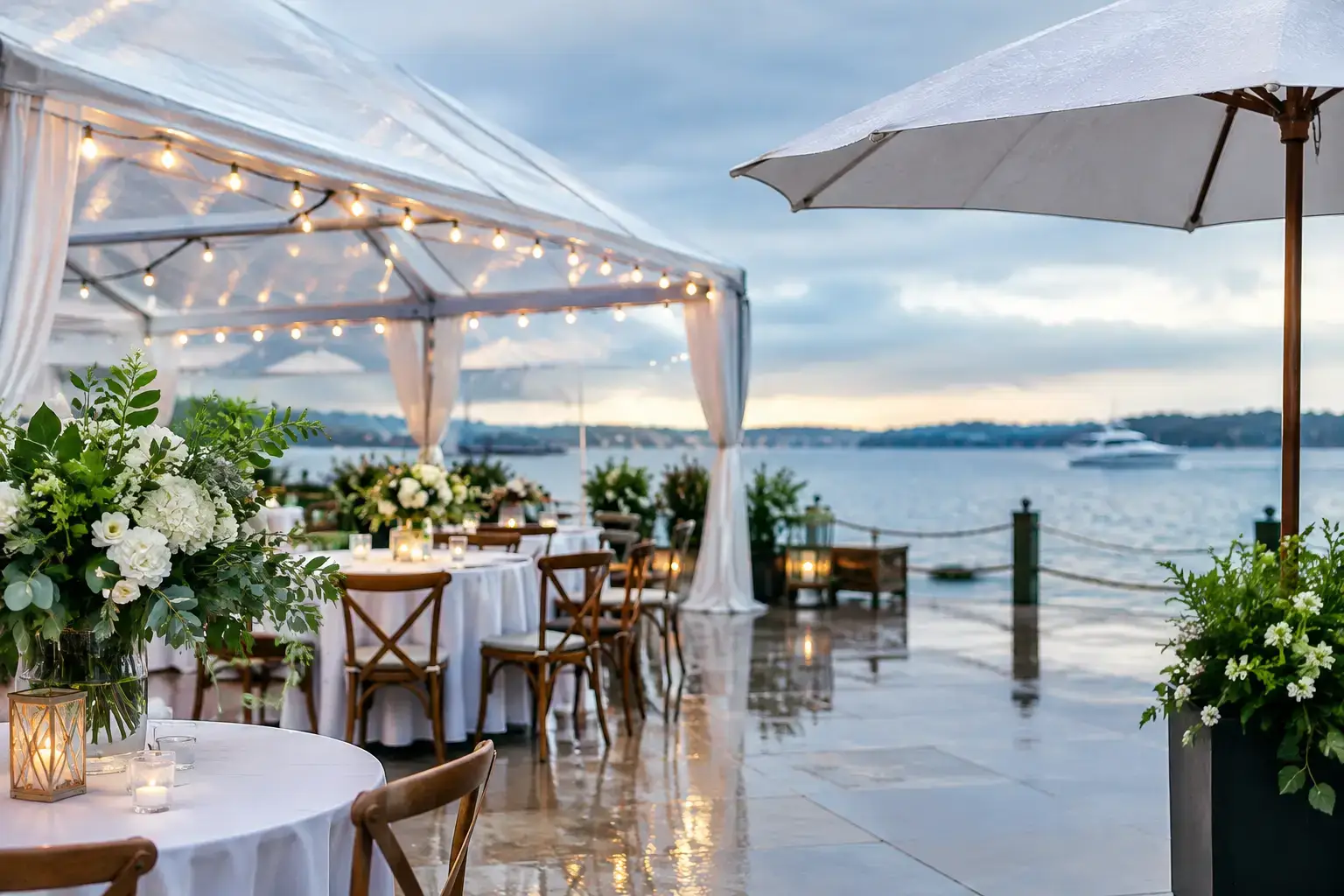
Rain Plans That Keep Waterfront Events Beautiful
Thoughtful rain plans protect the waterfront atmosphere, guest comfort, menus, and timing that make Maryland weddings and events feel effortlessly polished.
A waterfront forecast can feel personal when you have spent months picturing a ceremony beside the river or cocktails on a sunlit terrace. The right rain plans do not diminish that vision. They protect it, giving your guests a comfortable experience and giving you the freedom to enjoy the occasion rather than monitor the sky.
For weddings, milestone celebrations, and corporate gatherings, a weather plan works best when it is part of the event design from the beginning. It should preserve the atmosphere you want while accounting for the practical details guests will remember: a dry arrival, a clear ceremony view, a well-timed meal, and a host who appears entirely at ease.
What Thoughtful Rain Plans Really Do
A rain plan is not simply a last-minute move indoors. It is a coordinated alternative for each part of the event: guest arrival, ceremony or presentation, cocktail hour, dining, photography, entertainment, and departure. The strongest plans identify where each moment can happen comfortably if conditions change, who makes the call, and how the transition will be handled without disrupting the flow of the day.
That level of preparation matters at waterfront events. The Bush River provides a beautiful setting, but water can also make weather feel more immediate. Light rain, wind, cooler temperatures, and damp ground affect an outdoor event differently than they do a gathering in a city ballroom. A polished plan considers all of it without treating the waterfront as an afterthought.
For many hosts, the goal is not to recreate every outdoor detail indoors. It is to retain the feeling of the event: the water views, the welcoming hospitality, the menu, the celebration, and the people gathered in one place. Flexible indoor spaces make that possible while giving guests the comfort they deserve.
Start With the Event Moments That Matter Most
Every event has a few moments that carry extra emotional or professional weight. At a wedding, that may be the ceremony, first look, family portraits, and dinner service. For a corporate program, it may be registration, a keynote presentation, networking, or an awards announcement. Plan those moments first, then build the rest of the schedule around them.
Give the Ceremony or Program a True Home
A backup ceremony space should feel intentional, not improvised. Consider sightlines, seating, music, floral placement, lighting, and how the wedding party or speakers will enter. When guests can see and hear clearly, the experience remains meaningful even if the setting changes.
For business events, the same principle applies. A room that supports professional audiovisual needs, comfortable seating, and an organized presentation setup allows the agenda to continue with confidence. Rain should not mean competing with wind noise, wet equipment, or a rushed room change before a keynote.
It also helps to decide in advance whether the ceremony or program will move indoors entirely or whether a covered outdoor space can remain part of the experience. The answer depends on the forecast, wind direction, temperatures, and the comfort level of your guests. A brief shower is different from sustained rain, and a light drizzle may be manageable until strong winds make umbrellas impractical.
Protect the Arrival Experience
Guests form an impression before the first toast or welcome speech. Clear parking guidance, umbrellas where appropriate, covered entry points, and a warm welcome from the event team can make a rainy arrival feel cared for rather than inconvenient.
Think about footwear, too. A beautiful lawn may not be the right route after a steady rain, especially for guests in heels, formal shoes, or mobility devices. A thoughtful venue team can help direct guests along practical paths while preserving the elevated feel of the occasion.
For weddings, consider letting the wedding party arrive early and settle in before guests begin entering. This reduces congestion and allows everyone to refresh before photos or the ceremony. For a gala or corporate dinner, an indoor registration or reception area keeps name tags, welcome drinks, and early conversations out of the weather.
Build a Flexible Schedule, Not a Fragile One
Weather planning is as much about timing as space. A schedule with no breathing room can turn a 15-minute shower into an unnecessary source of stress. Include reasonable transition time between the ceremony, cocktail hour, dinner, and major programmed moments.
A first look can be especially helpful for couples who want waterfront portraits but do not want their entire photo schedule dependent on one narrow window after the ceremony. If the weather clears earlier in the day, photographers can capture outdoor images when the light and conditions cooperate. Then, if rain returns, the celebration continues without pressure.
The same approach benefits social and corporate events. If outdoor networking is planned before dinner, identify an indoor alternative that still feels social and spacious. If a team activity requires the lawn or waterfront, have a second format ready indoors. The best adjustment is one guests barely notice because it still feels like it belongs in the event.
Keep Food and Beverage at the Center of the Experience
An exceptional meal has a way of grounding an event, particularly when weather changes the schedule. Guests may forget the brief walk through rain. They will remember a thoughtfully prepared cocktail, a lively food station, attentive service, and a dinner that arrives beautifully presented and at the right temperature.
This is why in-house catering and coordination are particularly valuable when creating rain plans. The culinary and service teams can adjust timing together rather than working through separate vendors with different assumptions. If cocktails move indoors, the bar placement, passed appetizers, seating, and guest flow can be reconsidered as one cohesive experience.
Menu format can also offer flexibility. A plated dinner often creates a gracious, composed transition after a rainy ceremony. Stations may suit an event that needs a more relaxed indoor flow, allowing guests to mingle while exploring different dishes. For a corporate gathering, a reception-style menu can keep a delayed agenda feeling energetic instead of stalled.
There are trade-offs. An outdoor barbecue or elaborate raw bar may need a different service plan during rain, while certain displays require protection from moisture and wind. Discuss these possibilities early with your culinary team. A seasonal menu designed for the setting can remain memorable without relying on weather-sensitive presentation.
Decide Who Makes the Weather Call
One of the most useful parts of rain planning is also one of the simplest: designate the decision-maker. Couples may want input from a planner, photographer, venue coordinator, and family members, but too many voices can create hesitation when conditions are changing. For corporate events, a single point of contact from the organization should be empowered to work with the venue team.
Set a decision time in advance, along with the factors that will guide it. Forecast percentage alone is not enough. Consider expected rainfall, wind, temperature, ground conditions, guest age and mobility, setup requirements, and the time needed to make a room feel fully prepared.
Many events benefit from a two-part approach: an early decision for major setup needs, followed by a final weather check closer to guest arrival. The point is not to chase a perfect forecast. It is to make a timely, confident choice that protects the experience.
At Water’s Edge Events Center, experienced coordination, adaptable event spaces, in-house cuisine, and waterfront surroundings allow hosts to plan for both the view they love and the comfort their guests need. That preparation creates calm behind the scenes, which is exactly how a celebration should feel.
Communicate the Plan Without Making It a Big Announcement
Guests usually need only practical information. If rain is likely, a discreet note before the event can suggest appropriate footwear or remind attendees to bring a light wrap. For a wedding, avoid language that makes the weather sound like a disappointment. A simple, warm message sets expectations while keeping the focus where it belongs: on the celebration.
On the day itself, signage and friendly direction are more useful than repeated updates. Let guests know where to enter, where to find the ceremony or reception, and where coats or umbrellas can be placed. For corporate functions, communicate any room changes through the event agenda, welcome team, and presentation screens.
Rain also presents an opportunity for photographs with character. Reflective walkways, soft natural light, a waterfront horizon, and an elegant umbrella can create images that feel distinctive rather than compromised. The key is allowing your photographer enough flexibility to work with the conditions instead of asking everyone to wait outside for them to improve.
A well-considered rain plan does more than provide a backup room. It gives every guest the confidence that they are in capable hands, leaving more room for the laughter, conversation, excellent food, and meaningful moments that make an event unmistakably yours.