
How to Create a Seasonal Banquet Menu That Works
Learn how to create a seasonal banquet menu with fresh Maryland-inspired ideas, balanced courses, flexible service, and memorable guest appeal for hosts.
A banquet menu sets the pace for the entire celebration. It can make a winter gala feel warm and generous, give a waterfront wedding a sense of place, or turn a corporate dinner into an occasion guests remember long after the presentations end. When you create a seasonal banquet menu, the goal is not simply to use what is fresh. It is to build a meal that feels considered, satisfying, and easy for every guest to enjoy.
Seasonality gives a menu character, but it also calls for practical planning. A beautiful idea on paper must hold up for a full guest count, accommodate dietary needs, complement the event schedule, and arrive at the table with the same polish from the first plate to the last. The strongest menus balance those details with a clear point of view.
Start With the Occasion, Not the Ingredient List
Before choosing a first course or debating entrees, consider how guests will experience the event. A spring wedding with cocktail hour on the Bush River calls for a different rhythm than a December holiday party or a daytime leadership meeting. The time of day, length of the program, formality, guest count, and service style should all shape the menu.
For a wedding, the menu may need to carry guests from a lively cocktail hour through dinner and dancing. Passed appetizers and a station can create energy before a plated entrée provides a more formal pause. For a corporate event, a composed lunch that feels fresh without being overly heavy may better support conversation and an afternoon agenda. A milestone anniversary dinner might favor familiar, elevated dishes served at a more relaxed pace.
Seasonal ingredients should enhance that experience rather than dictate it. Local asparagus may be ideal for a spring reception, but it is only the right choice if it fits the rest of the meal and the way it will be served. Start with the feeling you want to create, then let the season help tell that story.
Choose a Seasonal Point of View
A seasonal menu does not require every dish to announce the season. In fact, subtlety often feels more refined. Think of the season as a guide for flavor, color, texture, and presentation.
Spring menus are naturally bright and crisp. Tender greens, peas, asparagus, radishes, herbs, strawberries, and lemon can bring freshness to salads, passed bites, and lighter entrées. A seared chicken breast with spring vegetables and a delicate herb sauce feels timely without becoming predictable. For a more celebratory option, a seafood course can reflect the waterfront setting while keeping the meal graceful and light.
Summer invites generous color and a more relaxed style of entertaining. Tomatoes, corn, peaches, berries, squash, and fresh basil suit garden-inspired salads, grilling stations, and vibrant side dishes. This is an excellent season for a cocktail-hour menu with variety, from miniature crab cakes to skewers and chef-attended stations. The trade-off is that warm-weather events often call for careful timing. Rich sauces and overly heavy entrées can feel less appealing when guests have spent time outdoors.
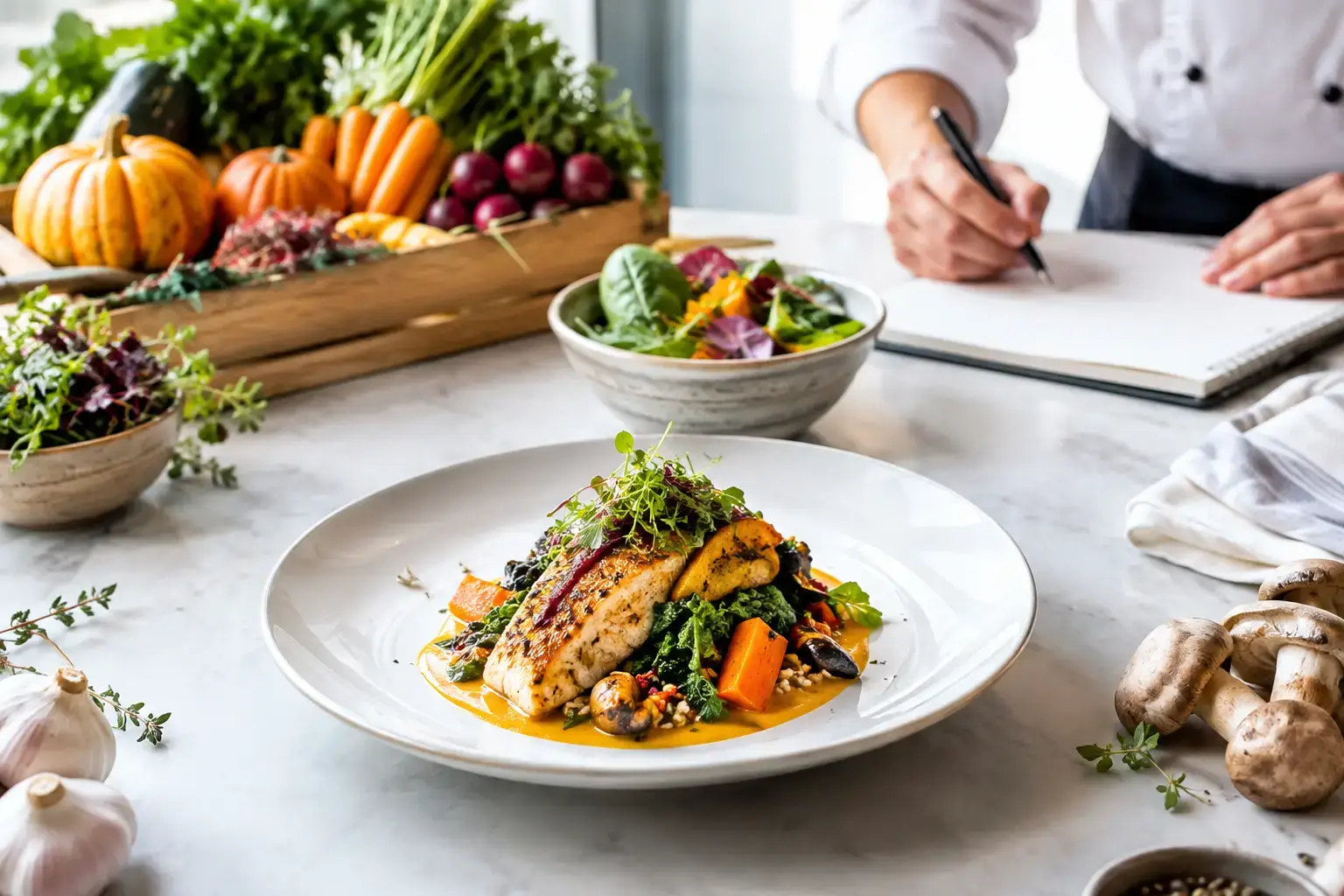
Fall menus benefit from depth and warmth. Apples, pears, squash, mushrooms, sweet potatoes, Brussels sprouts, and warming spices can create a sense of abundance. Braised meats, roasted poultry, and seasonal grain dishes are fitting choices for weddings, galas, and private dinners. Balance is still essential. A menu built entirely around rich, roasted flavors can feel one-note, so add contrast through bright greens, a tart fruit component, or a fresh herb garnish.
Winter is the season for comfort with polish. Root vegetables, citrus, pomegranate, hearty greens, and slow-cooked dishes can feel festive without becoming too heavy. A tender beef entrée with a seasonal puree, roasted vegetables, and a restrained red wine reduction can anchor a formal evening. For holiday celebrations, familiar flavors are welcome, but thoughtful presentation keeps the menu from feeling like a routine family buffet.
Build Each Course for Balance
The best banquet menus have movement. Guests should notice a progression from the first bite through dessert, with each course offering something distinct in temperature, texture, and flavor.
If cocktail hour includes savory fried bites, creamy dips, and a charcuterie display, dinner may benefit from a lighter first course and an entrée with clean, focused flavors. If a plated salad features fruit, nuts, and a rich cheese, avoid repeating those same elements in the entrée. Dessert should feel like a finish, not another heavy course guests feel obligated to decline.
A reliable approach is to balance richness with freshness. A buttery filet may need a crisp seasonal vegetable and a sauce used with restraint. A delicate fish entrée can be paired with a more substantial grain or potato preparation. A plant-forward entrée should be designed as a complete dish, not a collection of side items placed on a plate.
Portion and pacing matter as much as ingredients. A banquet meal needs to satisfy guests who have traveled, mingled, and celebrated, but it should leave room for conversation, dessert, and the rest of the evening. This is especially true when the event includes dancing, awards, speeches, or a late-night sendoff.
Create a Seasonal Banquet Menu for Every Guest
Customization should feel natural, not like an afterthought. A polished menu includes clear and appealing options for guests with dietary restrictions, as well as those who simply prefer a different style of entrée.
Rather than treating vegetarian, vegan, or gluten-conscious meals as separate obligations, build them into the overall menu conversation early. A roasted cauliflower steak with seasonal grains, vegetables, and a flavorful sauce can be as memorable as any traditional entrée. Gluten-free components can often be incorporated into appetizers, sides, and desserts with little change to the guest experience, provided the culinary and service teams plan carefully for preparation and labeling.
Offering two entrée choices can work beautifully for a formal wedding or gala, particularly when selections differ in both protein and style. For example, a beef option paired with a lighter seafood or poultry dish gives guests meaningful choice. For a larger event with varied tastes, stations or a well-designed buffet may create more flexibility while maintaining an elevated presentation.
There is no single best service format. Plated dining offers timing, elegance, and a shared moment at the table. Stations encourage movement and discovery. Family-style service feels generous and social, though it requires sufficient table space and thoughtful replenishment. The right format depends on the event’s atmosphere, guest count, and schedule.
Let the Setting Influence the Details
A menu feels more personal when it belongs to its setting. At a waterfront venue, that might mean a cocktail hour with regional seafood, a seasonal signature drink, or a plated dinner that highlights Maryland-grown produce. It does not mean every course must be nautical or overly themed. A light touch is more memorable than an obvious one.
Presentation also carries the seasonal story. Spring menus can feature clean greens and soft floral tones. Summer favors vivid produce and relaxed, abundant displays. Fall calls for layered color and roasted elements, while winter supports deeper hues, warm sauces, and elegant finishing touches. The goal is cohesion between the food, florals, tablescape, and setting, without making the menu compete with the room.
At Water’s Edge Events Center, Executive Chef Manny Martinez and the culinary team approach menu development as part of the complete event experience. That collaboration matters because the kitchen, service team, event coordinator, timeline, and room setup all affect how food is received by guests. A beautifully planned entrée is only as successful as its execution at the table.
Taste, Refine, and Plan for the Real Event
A tasting is the moment to move beyond general preferences. Consider what each dish tastes like alongside the other courses, how it will appeal across the guest list, and whether it matches the event’s formality. Ask practical questions as well: Will this appetizer be easy to enjoy while standing? Does this sauce hold well for a large plated dinner? Is the menu sufficiently filling for an evening celebration?
Be open to refinement. A favorite dish may need a seasonal adjustment, a different side, or a revised presentation to work best for the event. Flexibility is part of good planning, especially when seasonal availability shifts. A skilled culinary team can preserve the spirit of the menu while making smart changes that protect quality.
The most successful seasonal banquet menu gives guests something to talk about, but it never asks them to work too hard to enjoy it. Choose food that reflects the moment, honors your guests, and leaves space for the celebration around the table to feel unmistakably yours.


