
How to Pick a Gala Venue in Maryland With Confidence
Find a gala venue Maryland hosts trust for waterfront views, custom menus, polished service, and thoughtful planning from arrival through the final toast.
The room may look beautiful in photographs, but a gala is remembered in motion: the ease of arrival, the welcome at the door, the timing of dinner, the clarity of a keynote, and the last conversation shared over dessert. Choosing a gala venue Maryland organizations can rely on means looking beyond square footage to find a setting and team that can carry the full guest experience with confidence.
Whether you are planning a nonprofit fundraiser, corporate awards dinner, holiday gala, or community celebration, the right venue should make a sophisticated event feel manageable from the first planning meeting to the final farewell.
Start With the Purpose Behind the Gala
A gala can serve many goals at once. It may raise funds for an important cause, recognize employees and partners, strengthen client relationships, or bring a community together around a shared mission. Those goals should shape every venue decision.
For a fundraising evening, consider where registration, silent auction displays, sponsor recognition, cocktails, dinner, and a live appeal will take place. A corporate awards gala may need a polished stage, clear sightlines, presentation screens, and a sound system that allows every honoree to be heard. A holiday event may place greater value on a welcoming cocktail reception, seasonal cuisine, and room for guests to mingle comfortably.
The best venue conversation begins with more than a guest count. Share the event’s purpose, program flow, fundraising needs, entertainment plans, and desired atmosphere. A capable event team can then recommend a room configuration that supports the occasion rather than asking the occasion to fit a standard floor plan.
Consider the Guest Experience From Arrival Through Departure
A memorable gala should feel thoughtful from the moment guests arrive. Convenient access, clear parking guidance, a gracious entrance, and a comfortable registration area set the tone before the program begins. These details may seem practical, but they influence how relaxed and welcomed guests feel.
Once inside, guests need room to move between moments of the evening. A crowded check-in line, a bar placed too far from the reception area, or auction tables that interrupt traffic can diminish an otherwise elegant event. Ask how the venue manages guest flow during cocktails, dinner service, presentations, and departures.
Waterfront settings offer a particular advantage for galas because they give guests an experience beyond the ballroom. Views of the Bush River can provide a natural backdrop for arrivals, cocktail hour, sponsor photographs, and quiet conversations between program moments. The setting should complement the event, however, not complicate it. Confirm that indoor spaces are equally inviting and functional should weather change or the program require guests to transition indoors.
Think About Sightlines and Sound
Galas often include a formal program, whether that means a welcome from leadership, a mission-focused video, an auctioneer, an awards presentation, or live entertainment. Every guest should be able to see and hear what matters.
Ask where staging can be positioned, how many screens are available, and whether the audiovisual setup is managed by an experienced team. Consider guests seated at the edges of the room, not only those nearest the stage. A well-designed layout protects the energy of the evening by keeping guests connected to the program instead of straining to follow it.
Advanced audiovisual capabilities can also reduce unnecessary coordination. When the venue can support microphones, screens, presentations, and event lighting in-house, planners have fewer moving parts to manage and a clearer point of contact when schedules shift.
Choose a Gala Venue in Maryland That Can Adapt
Guest counts can change. Sponsors may request additional visibility. A seated dinner may become a reception with stations, or an auction may require more display space than originally expected. Flexibility is not an extra – it is a practical safeguard for a complex event.
When touring a gala venue in Maryland, ask to see how the available spaces can be arranged for your specific format. A reception-style fundraiser needs a different rhythm than a black-tie dinner, and a leadership awards program has different requirements than a holiday celebration. The venue should be able to explain how tables, dance floors, stages, bars, registration, and specialty displays can coexist without making the room feel crowded.
It is also wise to discuss timing early. Find out when vendors can arrive, when décor can be installed, how long the room is available after the program, and who oversees the transition between portions of the event. A beautiful venue becomes far more valuable when its operations are organized around the realities of event day.
Put Food at the Center of the Evening
At a gala, dinner is rarely just a break between speeches. It is one of the most direct ways to show guests that their attendance matters. A thoughtful menu can reinforce the tone of the event, reflect the season, accommodate varied dietary needs, and create a natural point of conversation at the table.
In-house catering offers meaningful advantages when the culinary and service teams know the space, the event timeline, and the standards expected by the host. Rather than coordinating a separate caterer, rental team, and venue manager, planners can work with one hospitality partner to shape the meal around the evening’s flow.
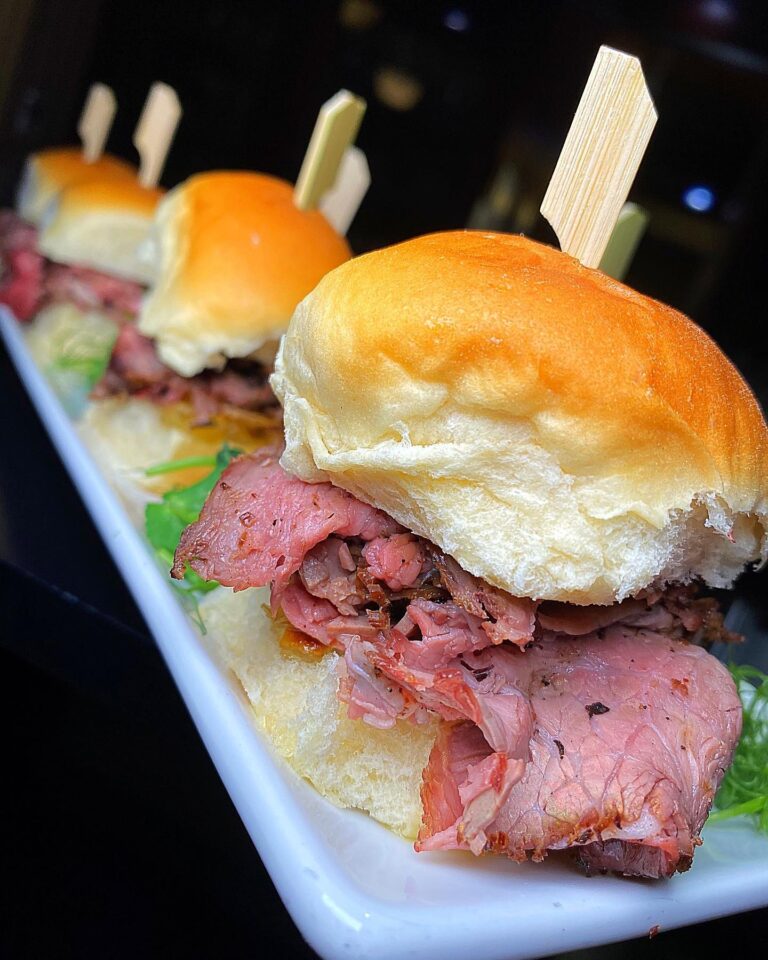
The right format depends on your audience. A plated dinner brings formality and structure to an awards gala or donor event. Chef-attended stations and composed small plates can create a more social energy for networking-focused celebrations. A cocktail reception with passed appetizers may suit a shorter program, while a late-night snack can keep the mood lively after a performance or dance floor opens.
Discuss the details that guests notice: the pace of service, wine and bar selections, vegetarian and allergy accommodations, coffee service, desserts, and how meals will be served around speeches. At Water’s Edge Events Center, Executive Chef Manny Martinez and the culinary team can build seasonal menus that feel polished, personal, and appropriate for the occasion – from reception fare and food stations to a refined plated dinner.
Look for One Clear Planning Partner
A gala can involve committee members, sponsors, board leaders, entertainers, photographers, auction teams, florists, and rental vendors. Without clear communication, even small changes can become time-consuming. A full-service venue helps bring the details into focus by providing coordination, catering, service, and space planning through one experienced team.
Before committing, ask who will be your primary contact, how decisions and timeline updates are documented, and who will be present on event day. You want a team that is warm with guests and precise behind the scenes. That balance allows the host committee to participate in the evening rather than spending it answering logistical questions.
Professional coordination also helps protect the program’s pacing. The team should know when to cue dinner, when to dim lights for a video, how to prepare the room for an announcement, and when to quietly resolve an issue before it reaches the host. Those are the details that make an event feel effortless to guests.
Build the Budget Around What Guests Will Feel
Comparing venue proposals solely by room rental can be misleading. A lower initial number may not include catering, staffing, tables and chairs, audiovisual support, service charges, or other essentials. Request a clear, itemized view of what is included and what may be added based on your final event plan.
This does not mean every gala needs the same level of formality. A successful event can be grand or intimate, traditional or contemporary. The key is investing in the elements that serve your purpose and your guests. For some organizations, that may mean a plated dinner and elevated bar service. For others, it may mean a dynamic cocktail reception, striking sponsor displays, and a strong audiovisual presentation.
A good venue partner will help you weigh those choices honestly. They should be able to explain where an investment will improve guest comfort or program quality and where a simpler approach may work just as well.
Questions Worth Asking Before You Book
Before selecting a venue, make sure you understand the practical details that shape event day. Ask about capacity for your preferred layout, parking and accessibility, weather contingencies, catering flexibility, dietary accommodations, bar service, audiovisual equipment, setup and breakdown windows, and on-site coordination.
Also ask for guidance based on events similar to yours. An experienced venue team can point out considerations a first-time gala chair may not know to raise, such as the right time to open silent bidding, the best placement for a sponsor step-and-repeat, or how much space a band needs to perform comfortably.
The strongest gala venues bring more than a beautiful setting. They create the conditions for guests to feel welcomed, inspired, and well cared for. When the space, cuisine, service, and logistics work together, your organization is free to focus on the message that brought everyone into the room.