
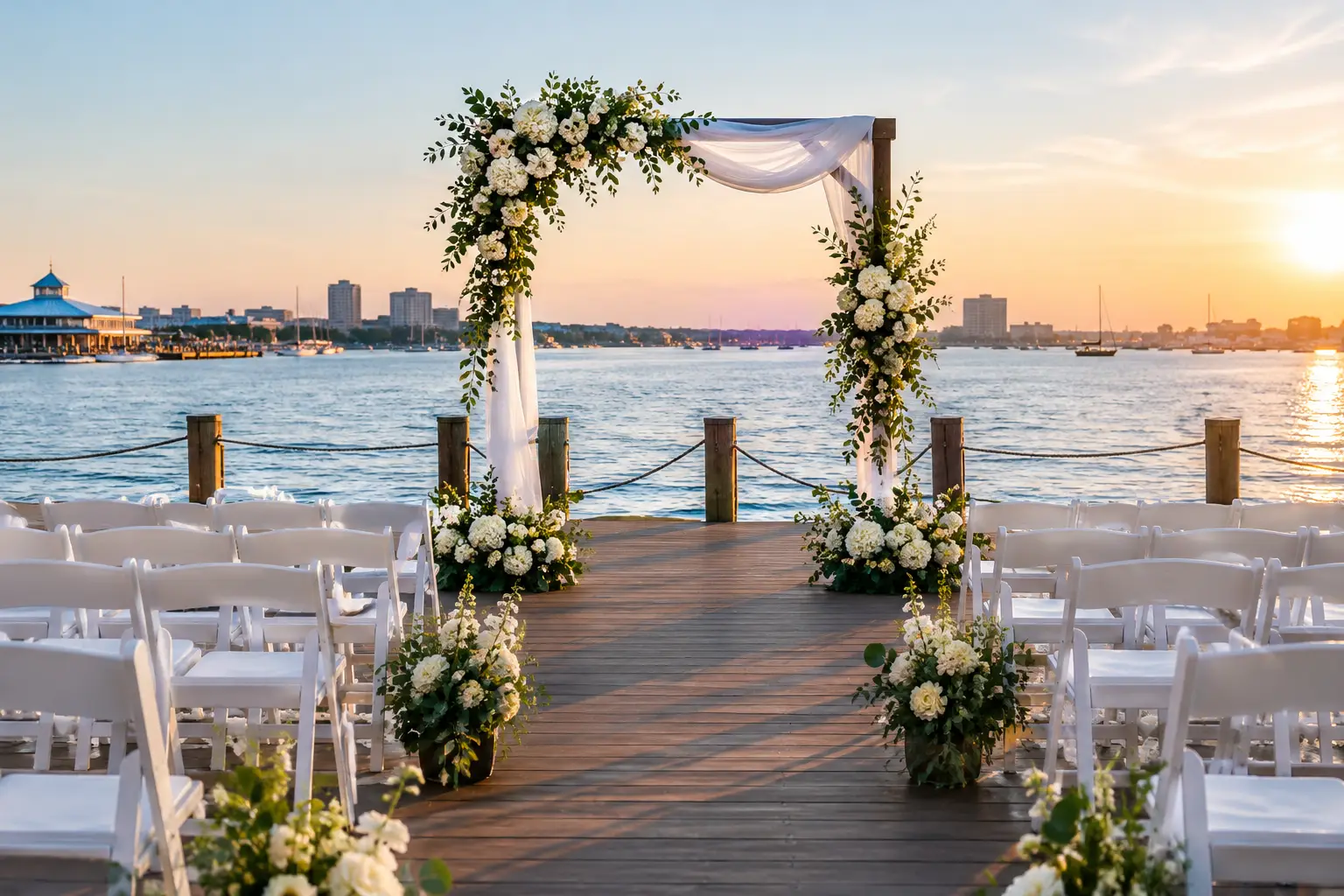
Maryland Waterfront Ceremony Planning Guide
This Maryland waterfront ceremony planning guide helps couples plan a polished, weather-ready celebration with memorable food, views, and guest comfort.
A waterfront ceremony has a way of making the moment feel expansive: the open sky, the movement of the water, and the quiet pause before two people say their vows. But the setting that makes a ceremony memorable also asks for thoughtful preparation. This Maryland waterfront ceremony planning guide is designed to help couples create a beautiful, comfortable occasion where the view enhances every detail instead of complicating it.
The best waterfront weddings feel effortless to guests because the planning behind them is precise. From the ceremony hour and seating direction to the cocktail menu and rain plan, each choice should support the experience you want people to remember.
Begin With the Guest Experience
Start by imagining the ceremony from your guests’ point of view. They will arrive, find their seats, take in the water, listen to your vows, and move into the celebration. A refined waterfront event makes each of those transitions feel natural.
Consider the size and needs of your guest list early. An intimate ceremony may allow for a more relaxed layout, while a larger gathering benefits from clearly defined aisles, thoughtful seating flow, and a reception space nearby. Guests should not have to wonder where to go next or spend too long moving between portions of the event.
Accessibility deserves the same attention as aesthetics. Choose a venue with convenient parking, manageable walking distances, accessible routes, and comfortable indoor spaces for guests who may need a break from the sun, breeze, or temperature changes. A waterfront ceremony should feel inviting for every generation on your guest list.
Choose a Ceremony Time That Works With the Water
Light is one of the most compelling reasons to marry on the water, but it should guide your schedule rather than be an afterthought. In Maryland, late afternoon and early evening often offer softer light for portraits and a more comfortable experience during warmer months. The exact timing depends on your date, the direction of the ceremony site, and how the sun moves across the property.
Before selecting a ceremony time, ask to see the space at roughly the same hour and season as your wedding day. Notice where the sun falls, whether guests will be looking into bright light, and how much shade is available. A ceremony facing the water may be visually striking, but the best orientation depends on the shoreline, photography priorities, and guest comfort.
Build in enough time for portraits without making guests wait too long for the reception to begin. A well-planned cocktail hour is especially valuable at a waterfront wedding. It gives guests a chance to enjoy the setting with a signature drink, passed appetizers, or a chef-curated station while you capture those just-married photographs.
Let the Setting Shape, Not Overwhelm, the Design
Waterfront surroundings already provide movement, color, and a sense of occasion. Your design can complement that natural character without competing with it. Soft florals, intentional linens, warm lighting, and a ceremony structure that frames rather than blocks the view can create an elegant result.
This does not mean every waterfront wedding must follow a coastal palette. A classic black-tie look, garden-inspired florals, clean modern lines, or richly colored seasonal accents can all work beautifully beside the water. The most successful design choices reflect the couple while taking cues from the season and venue architecture.
Keep wind in mind when selecting ceremony décor. Loose paper items, lightweight signage, taper candles, and delicate fabric installations may need additional support or a different placement. Florists and event coordinators can recommend arrangements that hold their shape and still look graceful in waterfront conditions.
Make Sound a Planning Priority
The water may be peaceful, but outdoor sound is less predictable than an indoor room. Wind, passing boats, nearby activity, and the natural openness of the setting can make it difficult for guests to hear vows or readings.
Professional microphones and a properly placed sound system are worth including in the ceremony plan, even for a smaller guest count. Ask who will manage the equipment, how microphones will be concealed or styled, and whether a sound check is scheduled before guests arrive. Clear vows are not a technical extra. They are central to the ceremony.
Build a Weather Plan You Will Actually Love
A waterfront celebration should always have a weather plan, but it should never feel like a disappointing backup. Maryland weather can shift quickly, particularly in spring, summer, and fall. Heat, showers, wind, and cooler evening temperatures are all possibilities.
Choose a venue with an attractive indoor alternative or covered option that can be prepared without disrupting the guest experience. The ideal plan preserves the feeling of the event, even if the ceremony moves indoors. This is where flexible event spaces and an experienced venue team make a meaningful difference.
Discuss the weather decision timeline in advance. Determine who monitors the forecast, when the final call will be made, and how vendors will be notified. If there is a chance of outdoor warmth, consider chilled water at arrival, shade options, and a shorter ceremony. For a cool-weather date, patio heaters, wraps, and a welcoming indoor cocktail space can make guests feel cared for.
A rain plan is not pessimistic planning. It is the confidence to enjoy your day regardless of the forecast.
Make Food Part of the Celebration
A beautiful view brings guests together. Exceptional food gives them another reason to talk about the evening long after it ends. For waterfront weddings, menus can feel connected to the setting without becoming overly themed or predictable.
A seasonal cocktail can set the tone upon arrival, followed by passed appetizers that are easy to enjoy during cocktail hour. Couples may prefer an elegant plated dinner, a lively chef-attended station, or a combination that gives the reception a more social rhythm. The right format depends on the guest count, timeline, and atmosphere you want to create.
Work with your culinary team on a menu that feels personal. Perhaps that means honoring family traditions, accommodating dietary needs with the same care as the main menu, or selecting late-night bites that keep the dance floor energized. At Water’s Edge Events Center, Executive Chef Manny Martinez and the culinary team approach catering as a defining part of the guest experience, not simply a required line item.
Do not overlook the practical side of hospitality. A waterfront cocktail hour may call for refreshing beverages, abundant water service, and appetizers that remain appealing outdoors. If guests will be outside after sunset, plan a smooth transition to dinner, dessert, or an indoor lounge where the celebration can continue comfortably.
Create a Reception Flow That Keeps the Energy Moving
The ceremony may draw guests to the water, but the reception is where your celebration takes on its own rhythm. Place key moments thoughtfully: introductions, dinner service, toasts, first dances, cake cutting, and open dancing should have room to breathe without creating long gaps.
A full-service venue can help coordinate these transitions across spaces, particularly when an outdoor ceremony is followed by an indoor reception. Consider how guests will be welcomed into the dining room, where escort cards will be placed, and whether the bar, dessert display, or lounge area can encourage natural movement throughout the evening.
Lighting deserves special consideration as daylight fades. Soft interior lighting, candlelit tables where appropriate, and illuminated pathways can make the shift from sunset to celebration feel intentional. Ask about evening views, patio lighting, and opportunities for a brief outdoor portrait moment after dark.
Use a Maryland Waterfront Ceremony Planning Guide to Ask Better Questions
When touring venues, ask more than whether the water is visible. Ask where guests will wait before the ceremony, how the venue handles wind or rain, what is included in the ceremony setup, and how staff coordinate the transition into cocktail hour. Ask about catering flexibility, bar service, parking, accessibility, audiovisual support, and the availability of indoor spaces.
You are not looking only for a scenic backdrop. You are choosing a hospitality partner that can turn many moving parts into one polished experience. The right team will answer practical questions clearly, offer solutions before problems arise, and make room for the details that feel unmistakably yours.
Your ceremony lasts only a small portion of the day, yet it sets the emotional tone for everything that follows. Give it the thoughtful timing, sound, comfort, and culinary planning it deserves. When the water, the welcome, and the service all work in harmony, your guests are free to be fully present for the reason they came: to celebrate your next chapter.


