
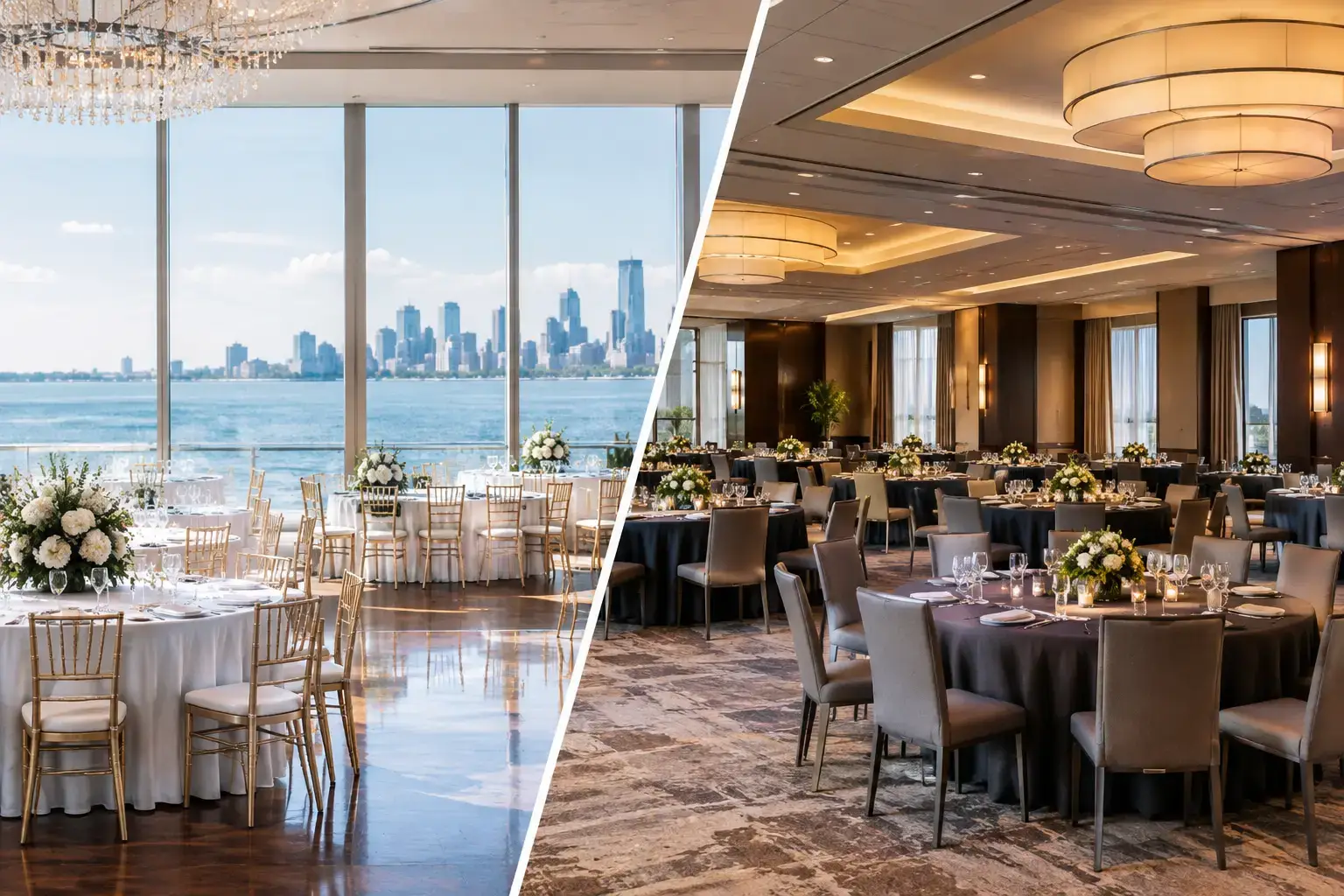
Waterfront Ballroom Versus Hotel Venue for Events
Compare a waterfront ballroom versus hotel venue for weddings, meetings, and celebrations, with expert guidance on views, food, flexibility, and service.
A waterfront ballroom versus hotel venue is not simply a choice between a scenic view and a convenient address. It shapes the pace of your event, the guest experience, the menu, the planning process, and the impression guests carry home. For a wedding, gala, milestone dinner, or business gathering, the right setting should support both the feeling you want to create and the details required to deliver it well.
Waterfront ballroom versus hotel venue: the central difference
A hotel venue is often designed around volume and convenience. It may offer guest rooms on-site, familiar meeting spaces, and a practical option for events with attendees traveling from several locations. For conferences, multi-day programs, or large room blocks, that infrastructure can be genuinely valuable.
A waterfront ballroom is typically selected for a more distinct sense of place. The water becomes part of the experience: a backdrop for a ceremony, a natural pause during cocktail hour, and a view that gives dinner or dancing a memorable setting. Rather than feeling like an event could happen anywhere, the setting helps make the occasion feel connected to a particular moment and location.
Neither option is automatically better. The more useful question is this: will your guests benefit most from overnight lodging at the event site, or from a setting that gives the celebration its own character? For many hosts, the answer depends on the type of gathering, the guest list, and how much they want the venue itself to contribute to the atmosphere.
Consider the first impression your guests will have
The first few minutes after guests arrive set a tone. A hotel ballroom can feel polished and efficient, particularly when guests are checking in, attending a meeting, or moving between scheduled sessions. Its strengths are familiarity and predictability.
A waterfront ballroom offers a different arrival experience. Guests see the shoreline, changing light on the water, and an event space that feels separate from the everyday. That visual setting can make a wedding ceremony feel more intimate, a holiday party more festive, or a nonprofit gala more elevated before the first toast is made.
For couples, the difference is especially meaningful in photographs. A ballroom with waterfront access can offer portraits outdoors without requiring the wedding party to travel to a second location. For social hosts, it creates natural opportunities for guests to step outside, reconnect, and enjoy the setting between courses or conversations.
Still, scenery should not come at the expense of comfort. Ask how the indoor space functions if rain, wind, heat, or an early sunset changes the plan. A well-run waterfront venue has an indoor experience that feels complete on its own, with the view as an enhancement rather than a dependency.
Food and hospitality can change the comparison
Catering deserves more attention than it often receives during venue tours. At some hotel venues, food and beverage service follows a standardized package structure designed to serve many types of events efficiently. That may be the right fit for a straightforward luncheon, a training day, or a gathering with limited menu needs.
For hosts who see dining as part of the occasion, an in-house culinary team can offer more room to shape the experience. Seasonal cocktails, passed appetizers, food stations, barbecue presentations, and plated dinners each create a different rhythm for an event. The menu should reflect the formality of the gathering, the time of year, and the people around the table – not merely fill a scheduled meal period.
At Water’s Edge Events Center, cuisine is treated as part of the hospitality, from the opening cocktail through the final course. That approach matters when you want guests to remember more than a beautiful room. It also simplifies planning when the culinary team, service staff, and event coordination team are working from one shared plan.
When comparing proposals, look beyond the per-person price. Confirm what is included in service charges, staffing, bar service, rentals, cake cutting, menu tastings, and dietary accommodations. A lower initial number can become less attractive if essential elements are priced separately or require outside coordination.
Flexibility matters more than square footage
Hotel venues may have multiple ballroom sizes and breakout rooms, which can be a major advantage for corporate programs with concurrent sessions. If your agenda calls for keynote presentations, small-group workshops, private executive discussions, and overnight accommodations, a hotel’s layout may solve several logistical needs at once.
A waterfront ballroom can be more compelling when the event needs to transition gracefully through several moments without feeling overly corporate or compartmentalized. Consider a wedding that moves from a waterfront ceremony to cocktails, dinner, and dancing, or a client event that begins with a presentation and ends with a hosted reception. The best spaces create those transitions naturally.
Ask each venue to walk you through your event, not just show you an empty room. Where will guests enter? Where will gifts, registration, or escort cards be placed? Is there a comfortable location for a cocktail hour? Can a private dinner feel intimate without crowding the dance floor later? These operational answers reveal far more than a capacity chart.
Meetings and galas need reliable technical support
For business events, the waterfront view may be a welcome advantage, but it cannot replace professional production. A hotel can be a strong choice when its conference infrastructure includes the equipment and technical staff your program requires. Before booking, clarify whether audiovisual equipment is included, what the on-site support looks like, and whether outside vendors are permitted.
A waterfront event center should meet that same standard while delivering a more distinctive guest environment. Reliable projection, sound, microphones, lighting, and presentation support allow attendees to focus on the message. After the formal program, the setting gives them a reason to stay, network, and enjoy the evening rather than head immediately for the parking lot.
For a gala, awards dinner, sales meeting, or holiday celebration, this balance can be particularly effective. The event should feel polished enough for leadership and clients, while remaining warm enough for guests to relax and connect.
Planning support is where the real value appears
Venue selection is often described as a search for the right room. In practice, it is a search for the right team. A hotel may assign an event contact who manages the property’s services, while other decisions remain with your planner, committee, or external vendors. That model can work well for experienced planners who prefer to direct multiple moving pieces.
A full-service waterfront venue is often a better fit for hosts who want guidance without losing personalization. Coordinators can help organize the timeline, room arrangement, catering flow, vendor arrivals, and guest-facing details that make an event feel effortless. The goal is not to make every event look alike. It is to manage the logistics carefully enough that your choices are allowed to shine.
This distinction is valuable for families planning once-in-a-lifetime celebrations and for corporate teams with limited time. When one experienced team understands the space, menu, service style, and schedule, there are fewer handoffs and fewer opportunities for details to get lost.
How to make the right choice for your guests
Start with the nonnegotiables. If a substantial number of guests need overnight rooms in the same building, a hotel may be the practical answer. If your priority is a celebration with a strong visual identity, a memorable dining experience, and a setting that encourages guests to linger, a waterfront ballroom may be the stronger match.
Then consider the event’s emotional center. A wedding may call for a sunset ceremony, a relaxed cocktail hour by the river, and a reception that feels unmistakably personal. A corporate program may need clear presentations, comfortable seating, and a reception space that rewards attendees for their time. A milestone dinner may need only one elegant room, exceptional food, and a view worth gathering around.
Finally, compare the full experience rather than the rental fee alone. Review menus, service expectations, technical needs, weather plans, timing, and the level of coordination included. The right venue should give you confidence long before the event date arrives.
Your guests may not remember every linen color or agenda item. They will remember how welcomed they felt, how well the evening flowed, and whether the setting made the occasion feel worthy of their time together.